Apprentice geisha debt repayment system
Memoirs of a GeishaThe Apprentice geisha debt repayment system is the financial structure that makes an apprentice’s route to professional life a debt-financed obligation to her okiya. Chiyo learns that the account includes not only lessons and daily care but the cost of acquiring her; repayment depends on a successful career, while the okiya’s control over training and patronage determines whether that career can begin. Her later adoption clears the debt on paper, but transfers the economic claim from repayment to ownership of her profits.
What the Debt Covers
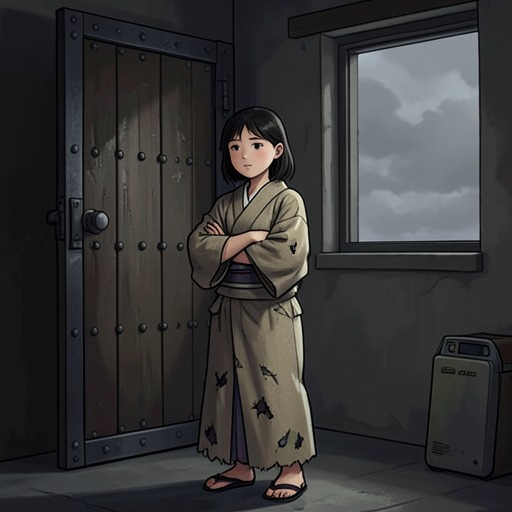
Auntie explains the system to Chiyo after warning her that Hatsumomo’s kimono trick has imposed a burden she may never work off. When Chiyo asks what debt means, Auntie describes an account that will be repaid only after she begins earning as a geisha. The charges include meals, lessons, and medical fees if she becomes ill; Chiyo also owes the okiya for the money spent to acquire her. The ledger therefore reaches backward to her arrival as well as forward into the costs of her training and upkeep.
The scale of the obligation makes the threat more than an abstract financial concern. Auntie says that the damage caused by the kimono incident will cost Chiyo more money than she has ever imagined, and that repayment will take a long time even if she succeeds. If she becomes a failed geisha, she will never pay it back. The system ties a girl’s future to both her capacity to earn and the okiya’s willingness to continue investing in her.
Training, Investment, and Risk
Debt also makes continued training a condition of repayment. Auntie warns that if Chiyo runs away, Mother will regard her as a bad investment and stop putting money into her; without lessons, she cannot become a geisha. The explanation exposes the double bind: the okiya’s expenditure creates the debt, while its authority over instruction controls the principal means Chiyo has to earn enough to discharge it. Chiyo’s work and prospects are thus organized by an account she did not choose and cannot settle without the institution that holds it.
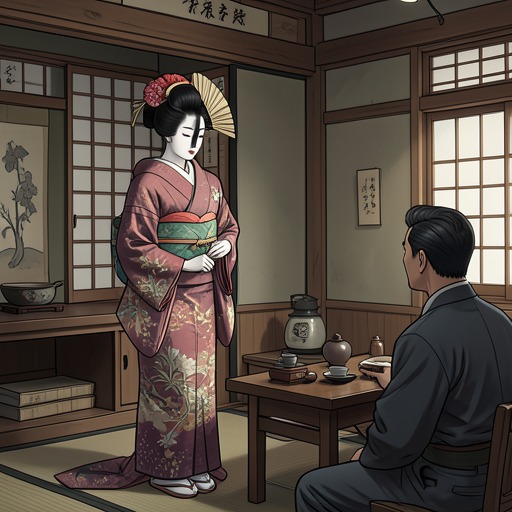
That calculation reappears when Mother negotiates with Mameha over taking Chiyo as a younger sister. Mother points out that Chiyo’s debts will grow before they diminish, and that Mameha’s fees would add to the okiya’s costs. She offers only half the usual share of Chiyo’s future earnings, then proposes that if Chiyo repays her debts by twenty, Mother will give Mameha the remainder of her customary compensation plus an additional thirty percent. The offer turns Chiyo’s projected success into a future revenue stream and makes the older-sister arrangement a negotiation among people financing, training, and claiming her work.
Repayment, Adoption, and the Claim on Earnings
The eventual settlement does not give Chiyo control over the value she produces. After her mizuage brings in a record fee, Mother adopts her. The money is enough to repay the okiya’s outstanding debts, but Mother adopts her because otherwise some of the proceeds would have gone to Chiyo. With adoption, the debts cease to exist because the okiya absorbs them; in exchange, all of Chiyo’s profits go to the household, not only at the time of her mizuage but thereafter. Her name changes from Sakamoto Chiyo to Nitta Sayuri as her household status changes along with the account.
This resolution distinguishes debt cancellation from economic independence. The liability disappears, but the okiya’s claim becomes more comprehensive: repayment gives way to the transfer of earnings under adoption. The system’s central mechanism is therefore not simply that an apprentice owes money, but that the household can convert the costs of care and training into lasting authority over the income those costs help produce.
The Household Economy in Scarcity
The story also shows how the okiya’s financial logic intersects with the material economy around it. Once General Tottori becomes Sayuri’s danna, he covers expenses including lessons, annual registration, and medical care; his position as director of military procurement also enables deliveries of tea, sugar, and increasingly scarce chocolates. His patronage does not transform Sayuri’s daily work, but it supplies the okiya with costs and goods that would otherwise be harder to secure. Care, professional maintenance, and access to scarce provisions remain connected to economic relationships rather than separated from them.
Wartime scarcity makes the value of household property visible in another way. While living with the Arashino family, Sayuri works sewing parachutes, sleeps on floor futons in the workshop, and shares meager food; when the family’s grandson cries from hunger, Mr. Arashino sells a kimono to raise cash. Mother, meanwhile, grows richer by trading other people’s heirlooms and handles many of the kimono sold in Kyoto, sometimes claiming she cannot find pieces that their owners hope to buy back. These episodes do not describe the apprentice debt ledger itself, but they show the broader world in which clothing, labor, food, and household survival are converted into economic value—and in which control of money and property determines who bears scarcity and who profits from it.